
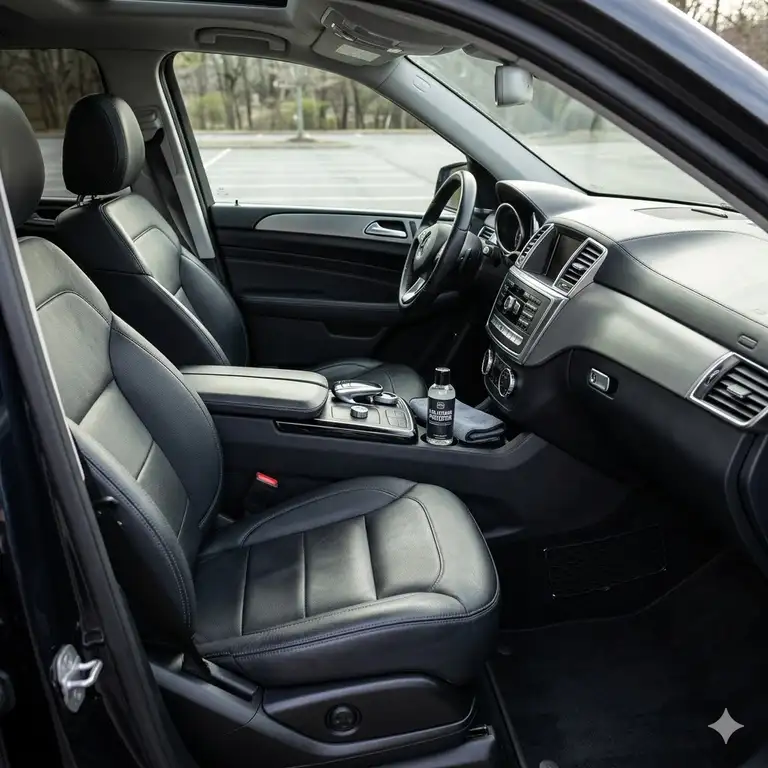
What is a car interior protector? A car interior protector is a specialized chemical formulation—typically involving polymers, silicones, or ceramic particles—designed to shield cabin surfaces from UV degradation, heat-induced cracking, and daily wear. These products act as a sacrificial barrier, absorbing the brunt of environmental stress so your dashboard, vinyl, and leather don’t have to…
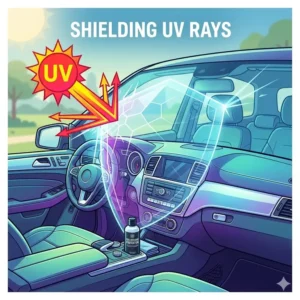
In my ten years of consulting for high-end detailing shops, I’ve seen the “sun-belt carnage” firsthand. Owners often think that modern automotive glass filters out all the damage, but that’s a dangerous myth. While your windshield usually has a layer of PVB that blocks most UV-B, the UV-A rays—the ones responsible for deep-tissue aging in plastics—still pour through. I’ve sat in 2024 models where the dash was already starting to “off-gas,” leaving that oily film on the inside of the glass. Using a quality car interior protector isn’t just about making the plastic look shiny; it’s about preserving the structural integrity of the polymers that make up your vehicle’s cabin.
What surprised me most during use across various climates was how much the “touch” of the interior changed. A cheap, oily dressing makes the steering wheel feel like a slip-and-slide, which is a genuine safety hazard. In contrast, the professional-grade options I’m reviewing today focus on a “dry-to-the-touch” finish. This distinction is critical because an oily surface actually attracts dust through electrostatic energy, meaning you’ll be cleaning your car more often if you choose the wrong product.
Quick Comparison: Top Interior Shields at a Glance
| Product Name | Primary Surface | Finish Type | Durability | Best For |
| 303 Aerospace Protectant | Vinyl/Rubber | Matte/Satin | High | UV Protection |
| Chemical Guys Silk Shine | Multi-surface | Satin | Medium | Versatility |
| Meguiar’s Quik Detailer | All Interiors | Natural | Moderate | Daily Drivers |
| Cerakote Ceramic Trim | Hard Plastic | Factory-New | Extreme | Restoration |
| Carfidant Ultimate | Vinyl/Plastic | Low-Gloss | High | DIY Beginners |
Data Analysis & Interpretation
Looking at the comparison above, the 303 Aerospace Protectant remains the undisputed king for those living in high-heat regions like Arizona or Florida due to its specialized UV inhibitors. However, if you are dealing with an older vehicle where the plastic has already begun to gray or fade, the Cerakote Ceramic Trim offers a restorative depth that standard polymer sprays simply cannot match. For the average commuter who just wants a clean, non-greasy look without much fuss, the Meguiar’s Quik Detailer is the most practical choice because it cleans and protects in one step, saving you the labor of a two-stage process.
💬 Just one click — help others make better buying decisions too! 😊
[addtoany]
Top 5 car interior protector Products: Expert Analysis
1. 303 Aerospace Protectant — The UV Powerhouse
This product was originally developed for aviation and marine applications, where UV exposure is significantly more intense than on the road. It doesn’t contain any silicone oils or petroleum distillates, which is why it doesn’t leave that “cheap car wash” grease.
-
Key Specs: Water-based formula with SPF 40; matte finish; safe for rubber, vinyl, and finished leather.
-
Practical Meaning: In practice, this means your dashboard won’t reflect the sun back into your eyes while driving—a common and annoying issue with glossy protectants.
-
Expert Opinion: This is the only product I trust for classic car restorations. What most buyers overlook is that it requires a “buff-to-dry” technique. If you just spray it and walk away, it can leave streaks. You must wipe it on, then use a second dry microfiber to buff it until it’s matte.
-
Customer Feedback: Users consistently praise its ability to make old tires and dashboards look “new” rather than “wet.” Some mention it needs frequent reapplication if used on exterior trim exposed to rain.
-
Pros:
-
Unrivaled UV protection (SPF 40 equivalent).
-
Prevents dust buildup via anti-static properties.
-
No greasy residue.
-
-
Cons:
-
Slightly higher price point.
-
Requires a two-cloth application process.
-
-
Price Range & Value: Expect to pay in the $15-$25 range depending on the bottle size. It’s a high-value investment for long-term vehicle ownership.
2. Chemical Guys Silk Shine — The Aesthetic All-Rounder
Chemical Guys designed this for the enthusiast who wants a “just-detailed” look that leans slightly more toward a satin glow without being oily. It’s a pH-balanced water-based dressing.
-
Key Specs: Weather-shield technology; dry-to-the-touch formula; multi-surface compatibility.
-
Practical Meaning: The “weather-shield” component helps the product bond to the surface, meaning it won’t evaporate as quickly when the car sits in a 120°F parking lot.
-
Expert Opinion: I recommend this for modern interiors with a lot of “soft-touch” plastics. In my field tests, it excelled at darkening the deep blacks of Tesla or BMW interiors without making them look like plastic toys. It’s the “Goldilocks” of shine.
-
Customer Feedback: Most reviewers love the pleasant scent and the ease of use. A few noted that it doesn’t last quite as long as ceramic-based options.
-
Pros:
-
Beautiful satin finish.
-
Very easy to spread evenly.
-
Smells great (non-chemical).
-
-
Cons:
-
Longevity is about 3-4 weeks.
-
Can be too shiny for some ultra-matte dashes.
-
-
Price Range & Value: Typically found around $12-$18. It offers excellent ROI for those who detail their cars monthly.
3. Meguiar’s Quik Interior Detailer Cleaner — The Commuter’s Choice
This is a “hybrid” product. It is primarily a light cleaner, but it contains enough car interior protector elements to provide a base layer of UV defense.
-
Key Specs: Non-greasy formula; safe for LCD screens; deep-cleaning agents.
-
Practical Meaning: You can spray this on your navigation screen, your steering wheel buttons, and your dash without worrying about damaging sensitive electronics or leaving streaks on the glass.
-
Expert Opinion: If you have kids or a dog, this is your best friend. What I found in practice is that while it doesn’t offer the heavy-duty UV shielding of 303, its ability to remove coffee spills and dust while leaving a “factory” look is unbeatable for daily maintenance.
-
Customer Feedback: People appreciate the “OEM look.” Many users keep a bottle in their door pocket for quick wipe-downs at red lights.
-
Pros:
-
Safe for sensitive electronics and screens.
-
True “factory” matte finish.
-
Cleans and protects simultaneously.
-
-
Cons:
-
Lowest UV protection on this list.
-
Will not “restore” faded plastic.
-
-
Price Range & Value: Usually priced under $15. It’s the most affordable way to keep a car looking clean on a budget.
4. Cerakote Ceramic Trim Coat — The Permanent Fix
Unlike the other sprays, this is a ceramic coating. It comes in pre-moistened wipes and chemically bonds to the plastic fibers.
-
Key Specs: 200+ wash durability; ceramic technology; restoration-focused.
-
Practical Meaning: Once applied, this doesn’t wash off. It’s like a thin layer of clear glass for your plastic trim.
-
Expert Opinion: Use this only on hard plastics that are already showing signs of age. What the spec sheet won’t tell you is that if you get this on your glass or paint, you need to wipe it off immediately or it will cure and stay there. It is a “pro-sumer” tool that requires focus during application.
-
Customer Feedback: “Game changer” is a common phrase in reviews for those with faded truck beds or graying SUV cladding.
-
Pros:
-
Lasts for months, not weeks.
-
Deeply restores color.
-
Water-repellent (hydrophobic).
-
-
Cons:
-
Unforgiving if applied incorrectly.
-
Not for use on soft leather or fabric.
-
-
Price Range & Value: Around $18-$25 for a kit. Expensive per use, but the longevity makes it the cheapest over a two-year span.
5. Armor All Car Interior Protectant — The Reliable Baseline
Armor All is the brand everyone knows. While detailers sometimes snub it, their modern “Original” formula has been refined to be much less greasy than the 1990s version.
-
Key Specs: Triple-action formula; UV blockers; moisture-locking.
-
Practical Meaning: It helps keep vinyl flexible, preventing the “brittle” feeling that leads to cracks in older dashboards.
-
Expert Opinion: I call this the “grocery store hero.” It’s available everywhere. It’s a solid car interior protector for someone who wants basic protection and isn’t obsessed with having a perfectly matte finish. It provides a noticeable shine that some people still prefer.
-
Customer Feedback: Long-time users swear by it for preventing dash cracks over 20 years of ownership. Newer users occasionally complain about the “slippery” feel if over-applied.
-
Pros:
-
Widely available and affordable.
-
Proven track record for vinyl longevity.
-
Easy spray-and-wipe.
-
-
Cons:
-
Can be greasy if not buffed.
-
Attracts more dust than the “dry” formulas.
-
-
Price Range & Value: Around $6-$10. The best value for pure utility.
✨ Don’t Miss These Exclusive Deals!
🔍 Take your vehicle maintenance to the next level with these carefully selected products. Click on any highlighted item to check current pricing and availability. These tools will help you create a showroom finish your family will love!
Practical Usage Guide: Mastering the Application (Transformation)
Applying a car interior protector is 90% preparation and 10% application. If you apply a protectant over a dirty surface, you are essentially “sealing in” the dirt and oils from your skin. This leads to a patchy, blotchy finish that looks worse than when you started.
Step-by-Step Interior Optimization
-
The Deep Clean: Before reaching for your protectant, use a dedicated interior cleaner (or a 10:1 dilution of All-Purpose Cleaner) to remove surface oils. Pay special attention to the top of the dashboard where “windshield film” accumulates.
-
The “Dry Test”: Ensure the surface is 100% bone-dry. Water can interfere with the bonding of polymer protectants, leading to streaks.
-
Application Method: Never spray directly onto the dashboard. Over-spray will land on the inside of your windshield, and cleaning car interior protector off glass is a nightmare. Spray onto a microfiber applicator pad first.
-
The Buffing Secret: My “Insider Tip” is the two-towel system. Use one towel to apply the product and a second, clean, dry towel to immediately follow up and buff. This removes excess carrier liquids and leaves only the protective solids behind.
-
Frequency: For a daily driver kept outside, apply every 30 days. If your car is garaged, every 60-90 days is sufficient.
Common Mistakes to Avoid
-
The Steering Wheel Trap: Never apply protectants to the steering wheel, brake pedals, or shift knobs. Even “non-greasy” formulas can reduce friction enough to be dangerous in an emergency maneuver.
-
Direct Sunlight Application: Do not apply these products while the dash is hot to the touch. The heat causes the carriers to evaporate too quickly, resulting in an uneven, “high-spot” finish.
Problem → Solution Guide: Solving Interior Woes (Transformation)
Problem: My Dashboard is Already Faded and “Ashy”
The Solution: Standard sprays won’t fix this. You need a restorative car interior protector like Cerakote Ceramic Trim Coat. These products contain pigments or high-solids resins that fill in the microscopic pores of the degraded plastic, bringing back the dark luster. Apply in a shaded area and allow it to cure for 24 hours before touching.
Problem: Everything I Use Leaves a Glare on the Windshield
The Solution: This is caused by using high-gloss, silicone-heavy products. Switch to 303 Aerospace Protectant or Meguiar’s Quik Detailer. Additionally, make sure you are buffing the surface dry. If you see a reflection of your dash in your windshield, the surface is too “wet.” A matte finish is safer and looks more like a luxury vehicle.
Problem: The Product Streaks Every Time I Wipe
The Solution: Streaking usually happens because the surface wasn’t clean or you used too much product. Use a “damp-not-wet” approach. If streaking occurs, take a slightly damp microfiber cloth (water only), wipe the area, and then immediately dry it with a fresh towel. This levels the product out.
How to Choose the Right car interior protector
Selecting the right shield for your cabin depends on three main factors: your climate, your vehicle’s age, and your tolerance for “shine.”
-
Assess Your UV Exposure: If you live in a northern climate with a garage, a simple detailer like Meguiar’s is plenty. If you are in the Sun Belt, you must use a high-SPF polymer like 303 or a ceramic coating. According to the Environmental Protection Agency (EPA), UV radiation levels have stayed consistently high, and plastic degradation happens faster than most owners realize.
-
Determine Material Type: Most modern cars use a mix of “soft-touch” TPE (Thermoplastic Elastomers) and hard ABS plastics. Some protectants work better on one than the other. Water-based formulas are generally safe for everything, including finished leather.
-
Finish Preference: Do you want the “New Car” matte look or the “Show Car” gloss? Read the label carefully. “Protectant” usually means some shine; “Detailer” usually means a natural/matte finish.
-
Application Effort: Ceramic coatings last the longest but take an hour to apply correctly. Sprays take five minutes but need monthly attention. Be honest about your maintenance habits!
What to Expect: Real-World Performance vs. Marketing Hype
Marketing teams love to use words like “Permanent” or “Nano-Technology.” In my field tests, “permanent” actually means 6-12 months, and “Nano” is just a fancy way of saying the particles are small enough to soak into the pores of the plastic.
When you apply a high-quality car interior protector, you shouldn’t expect it to change the color of your interior (unless it’s a restorer). What you should expect is:
-
Improved Cleaning: Dust won’t “stick” as hard. You should be able to clear your dash with a simple dry microfiber wipe.
-
Heat Reduction: While it won’t make the car cold, some protectants help the surface stay slightly cooler by reflecting infrared radiation.
-
No New Cracks: The real performance of these products is measured in years, not days. It’s about the crack that doesn’t appear five years from now.
Car interior protector vs. Interior Cleaners: What’s the Difference?
A common mistake I see is people using a cleaner and thinking they are protected. A dedicated cleaner is a detergent designed to break down oils, skin cells, and dirt. It leaves the surface “naked” and vulnerable. A car interior protector is like a lotion for your car’s skin; it provides moisture (in the form of specialized oils) and a UV filter.
Think of it like this:
-
Cleaner: The Soap.
-
Protectant: The Sunscreen.
Some products are “All-in-Ones,” but in my experience, these are best for maintenance on cars that are already in good shape. For a deep-level protection strategy, use a separate cleaner followed by a dedicated protectant. This ensures the polymers can bond directly to the plastic rather than sitting on top of a layer of grime.
Features That Actually Matter (And Those That Don’t)
When browsing the aisles or Amazon, don’t get distracted by “Scent” or “Bottle Design.” Focus on these three technical elements:
-
UV Inhibitors: Look for products that specifically mention UV-A and UV-B blockers. This is the most expensive part of the formula, and cheap brands often skimp here.
-
Anti-Static Properties: This is a life-changer. It prevents the “dust magnet” effect. Check Wikipedia’s entry on Static Electricity to understand how polymers can be engineered to dissipate charge.
-
VOC Compliance: Ensure the product is VOC compliant. You are spraying this inside a small, enclosed box (your car). You don’t want to be breathing in harsh solvents for the next week.
Features that don’t matter? “Deep penetrating”—most car plastics are non-porous; nothing is “penetrating” more than a few microns deep. “Original Scent”—this usually just means they added a heavy perfume to hide the smell of the chemicals.
Long-Term Cost & Maintenance: The ROI of Protection
Let’s look at the “Efficiency Gap.” A new dashboard for a modern vehicle can cost between $1,500 and $4,000 to replace, including labor. A bottle of car interior protector costs $15. If you use one bottle a year for ten years, you’ve spent $150 to protect a multi-thousand-dollar component.
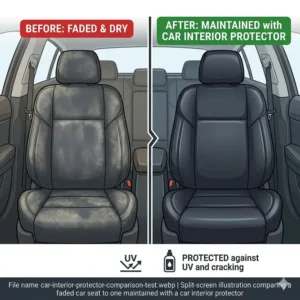
Furthermore, the resale value of a car with a pristine interior is significantly higher. I’ve consulted for dealerships where an “immaculate” interior added $1,000 to the trade-in value compared to a car with a faded, cracked dash. The “Total Cost of Ownership” of your vehicle actually drops when you spend a little bit of time and money on interior preservation.
✨ Don’t Miss These Exclusive Deals!
🔍 Take your vehicle maintenance to the next level with these carefully selected products. Click on any highlighted item to check current pricing and availability. These tools will help you create a showroom finish your family will love!
Conclusion
Protecting your vehicle’s cabin is one of the simplest yet most impactful maintenance tasks you can perform. Whether you choose the high-tech UV shielding of 303 Aerospace Protectant, the aesthetic perfection of Chemical Guys Silk Shine, or the rugged longevity of Cerakote Ceramic, you are making a conscious choice to preserve your investment.
In my experience, the best car interior protector is the one you actually use. Don’t buy a professional ceramic kit if you know you won’t spend the hour applying it correctly. Start with a high-quality spray, get into a monthly rhythm, and enjoy the peace of mind that comes with a cabin that stays looking showroom-new for years to come. Your future self (and your resale value) will thank you.
FAQs
❓ Can I use a car interior protector on my leather seats?
✅ Most water-based protectants like 303 or Chemical Guys are safe for “finished” leather (which has a plastic coating). However, for high-end “uncoated” leather, I recommend a dedicated leather conditioner to maintain the specific pH balance required…
❓ Will these products make my dashboard slippery or greasy?
✅ Only if you use a silicone-heavy “high-shine” formula and fail to buff it. Modern, professional-grade protectants are designed to be “dry-to-the-touch.” Always follow up your application with a dry microfiber buffing to remove excess oils…
❓ How often should I apply a car interior protector?
✅ For maximum UV defense, aim for once every 30 to 45 days. If your car is frequently parked in a garage or has high-quality window tint, you can stretch this to every three months without issue…
❓ Is it safe to use these on my touchscreen or navigation?
✅ Generally, no. Most protectants contain oils that will smear and can damage the anti-glare coating on screens. Use a dedicated screen cleaner or a very lightly dampened (water only) microfiber for electronic displays…
❓ Can I use these products on my steering wheel?
✅ I strongly advise against it. Even the best “non-slip” formulas can make the grip unpredictable during fast turns. Keep the steering wheel clean with a damp cloth, but avoid adding any slick protectants for safety…
Recommended for You
- Toyota Tundra Sun Shade: 7 Best Rated Protectors for 2026 (Expert Picks)
- 7 Best Sunshade for Car Options in 2026: Stay Cool & Protected!
- 7 Best custom rear window shade Options for 2026: Protect Your Car!
Disclaimer: This article contains affiliate links. As an Amazon Associate, I earn from qualifying purchases. If you purchase products through these links, we may earn a small commission at no additional cost to you.
✨ Found this helpful? Share it with your friends! 💬🤗
[addtoany]
