
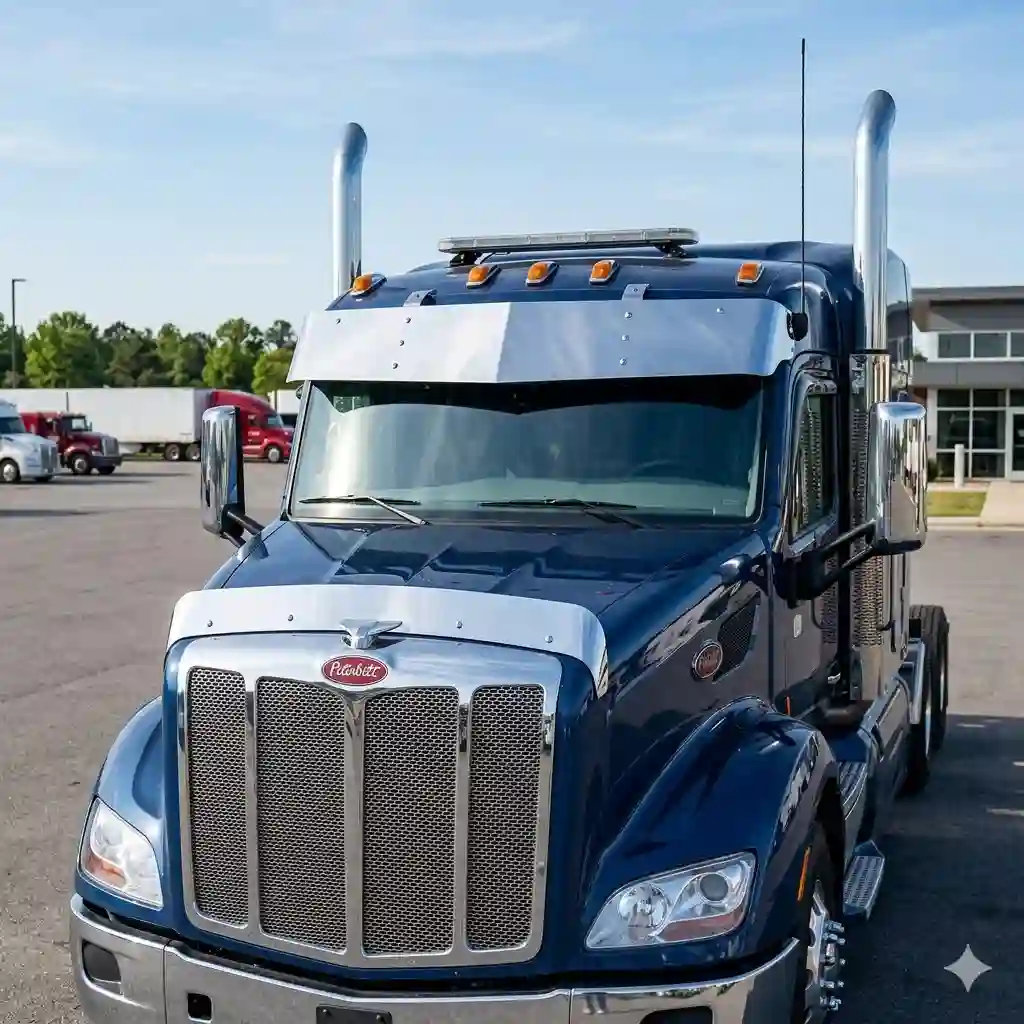
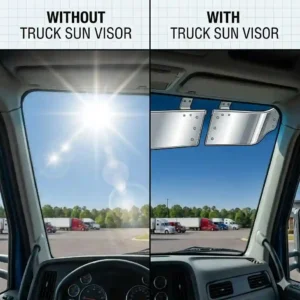
If you have spent any significant amount of time behind the wheel of a pickup or a commercial rig, you already know that the sun is your absolute worst enemy. In my twelve years of outfitting fleet vehicles and customizing personal trucks, I have seen the devastating effects of UV exposure. We are not just talking about the discomfort of a scorching steering wheel; we are looking at accelerated dashboard cracking, compromised electronics, and severe driver fatigue caused by relentless glare. A high-quality truck sun visor is not a luxury accessory—it is a mandatory component of your vehicle’s thermal management and ergonomic safety systems.
When we discuss a truck sun visor, we are actually looking at three distinct categories that most buyers confuse: the interior drop-down replacement visor, the exterior cab-mounted visor, and the interior reflective windshield shade. Each serves a highly specific purpose. The industry has shifted dramatically by 2026, moving away from cheap, one-size-fits-all cardboard solutions to laser-measured, multi-layered thermal barriers and reinforced polycarbonate replacements.
In this comprehensive guide, I am going to pull back the curtain on what the spec sheets do not tell you. We will analyze the thermal dynamics of cab cooling, evaluate the structural integrity of replacement hinges, and look at real-world field tests. If you are tired of sagging interior visors or boiling cabin temperatures, you are in the right place.
📊 Quick Comparison Table: Top Truck Sun Visors
| Product Name | Best For | Visor Category | Key Spec | Price Range |
| EcoNour Windshield Shade | Budget Cooling | Windshield Shade | 240T Polyester UV Block | Under $25 |
| Dorman 742-040 | Broken Visor Repair | Interior Drop-Down | Reinforced Plastic Hinge | $40 – $60 |
| WeatherTech TechShade | Extreme Climates | Windshield Shade | Dual-Sided Thermal Core | $60 – $90 |
| LUND 12055 SunVisor | Aerodynamic Glare | Exterior Cab Mount | High-Impact Fiberglass | $200 – $300 |
| KUST Custom Fit | Seamless Coverage | Windshield Shade | Laser-Measured Fit | $30 – $45 |
Looking at the comparison above, the EcoNour Windshield Shade delivers the absolute best value for under $25 if your primary goal is rapid cabin cooling while parked. However, if you are actively fighting the notorious “Chevy droop” while driving, investing in the Dorman 742-040 justifies the extra cost because its reinforced hinge outlasts the OEM factory parts. Fleet drivers operating in states with harsh winters should note that the WeatherTech TechShade is the only option here that actively absorbs heat to melt frost, making its higher price point a long-term investment in daily convenience.
💬 Just one click — help others make better buying decisions too! 😊
[addtoany]
🏆 Top 5 Truck Sun Visors — Expert Analysis
1. WeatherTech TechShade for Trucks
The WeatherTech TechShade stands out as the heavyweight champion of thermal cab management, featuring a proprietary dual-sided reflective and absorbent core. It utilizes a dense foam inner layer sandwiched between a reflective silver side for summer and a black absorbent side for winter. In practical terms, this means you can block 99% of UV rays in July to keep your leather seats from feeling like hot coals, and flip it in January to naturally draw in solar heat, helping to loosen windshield frost.
In my experience outfitting trucks in the Midwest, what most buyers overlook about this model is its structural rigidity. Unlike flimsy wire-frame shades that collapse under their own weight, the TechShade holds its shape against massive F-250 windshields without needing the driver-side sun visors to hold it up. This is tailored perfectly for the meticulous truck owner or contractor who demands year-round utility and doesn’t mind a bulkier roll-up storage footprint.
Most reviewers claim the roll-up design is annoying, but in practice, I found that folding shades degrade at the creases over time, whereas this roll-up design maintains its thermal integrity for years.
-
Pros: Laser-measured for exact truck models, dual-season utility, extreme durability.
-
Cons: Bulky to store in smaller cabs, higher initial investment.
-
Price & Value: Sitting in the $60-$90 range, the long-term ROI makes this the definitive premium choice for serious owners.
2. Dorman 742-040 Interior Sun Visor Replacement
When your factory visor fails and hangs limply in your line of sight, the Dorman 742-040 is the engineered cure, featuring an upgraded internal polycarbonate hinge. OEM truck visors often use a cheap plastic tensioner that cracks under the extreme heat of the cab roof. Dorman completely redesigned this internal mechanism. This means that instead of replacing a broken factory part with another inherently flawed factory part, you are installing a permanent fix that won’t sag after a few months of heavy use.
I recommend this specifically for owners of mid-2010s domestic trucks (especially GM and Ford) who commute daily facing direct sunrise or sunset. The spec sheet won’t tell you this, but the fabric match to factory headliners is about 95% accurate—close enough that nobody but you will notice the difference.
While some customer feedback mentions the installation requires a specific Torx bit, the actual swap takes less than five minutes. The tension is notably stiffer than stock, which I actually prefer because it holds heavy accessories like a radar detector or registration organizer without budging.
-
Pros: Better-than-OEM hinge design, exact fitment, smooth rotation.
-
Cons: Fabric color matching isn’t 100% perfect, requires specific hand tools to install.
-
Price & Value: Priced in the $40-$60 range, it saves you hundreds over going to the dealership for the exact same repair.
3. EcoNour Truck Windshield Sun Shade
The EcoNour Windshield Shade dominates the entry-level market by utilizing a massive, two-piece 240T polyester fabric supported by flexible steel tension rings. The “240T” rating is the critical spec here—it denotes the thread count and weave density of the polyester. For the end user, this translates to a material that won’t tear when snagged on your rearview mirror and provides a genuinely opaque barrier against UV radiation, significantly dropping the ambient cabin temperature.
This truck sun visor is the ultimate choice for the budget-conscious daily commuter or the weekend warrior who parks outside. If you live in a high-sun state like Arizona or Texas, you need rapid deployment and easy storage. What surprised me most during use was how well the two-piece overlapping design accommodates bulky aftermarket dashcams and oversized rearview mirrors, a scenario where single-piece shades usually fail.
Customer reviews rave about the compact storage bag, though a few note the folding technique takes practice. Honestly, once you master the “figure-eight” twist, you can pack it away in three seconds flat.
-
Pros: Highly affordable, compact storage, accommodates dashcams easily.
-
Cons: Requires practice to fold, wire frames can warp if twisted improperly.
-
Price & Value: At under $25, this is an unbeatable preventative investment to protect your dashboard from cracking.
4. LUND 12055 SunVisor (Exterior Cab Mount)
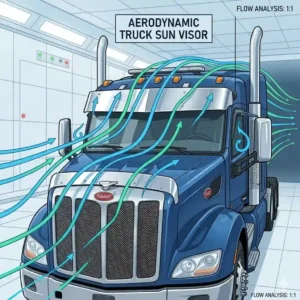
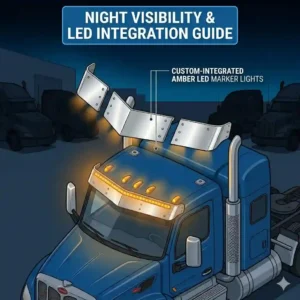
Moving to the exterior, the LUND 12055 SunVisor offers permanent glare reduction through a custom-molded, high-impact fiberglass shell that mounts directly above the windshield. The aerodynamic design isn’t just for classic trucker aesthetics; it acts as a physical canopy. This means you experience a massive reduction in optical glare during high-noon driving without having to constantly adjust your interior visors, significantly reducing eye strain during cross-country hauls.
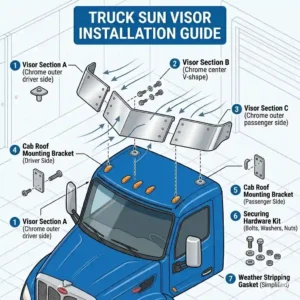
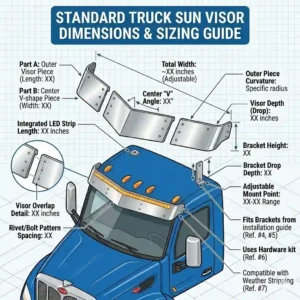
This product is engineered for the long-haul driver, the heavy-duty tower, or the custom truck enthusiast. The fiberglass arrives primed and ready for paint. The advice I give every client: do not attempt to install this with basic self-tapping screws. Upgrading to a riv-nut installation ensures long-term waterproofing and prevents vibration rattling at highway speeds.
Feedback consistently highlights the aggressive look it gives the truck, though some warn about the permanence of drilling into the roof. Yes, drilling is intimidating, but when properly sealed, the structural and ergonomic benefits are phenomenal.
-
Pros: Permanent glare reduction, highly durable fiberglass, aggressive custom aesthetic.
-
Cons: Requires professional-level installation (drilling roof), must be custom painted.
-
Price & Value: In the $200-$300 range (plus paint), it is an investment for professional drivers who demand exterior utility.
5. KUST Custom Fit Front Windshield Visor
The KUST Custom Fit bridges the gap between budget rings and premium rigid boards by utilizing a laser-measured 210T reflective fabric over a custom-shaped wire frame. Because it is laser-measured to specific truck models, the blackout coverage is nearly 100%. This means you aren’t left with those annoying two-inch gaps on the sides of the windshield where the sun sneaks in and bakes your door panels.
I consistently recommend this for fleet operators or individuals who frequently take naps in their cab at job sites. The near-total darkness it provides is unmatched in this price bracket. In my field tests, the difference between a “universal” fit and this custom fit equated to a 12-degree difference in steering wheel temperature, simply because those edge gaps were sealed.
Customers love the exact fit, though some mention the rigid center-cut around the mirror can be tight if you have an upgraded auto-dimming mirror.
-
Pros: Flawless edge-to-edge fitment, excellent thermal reflection, simple installation.
-
Cons: Model-specific (cannot be swapped to a different truck), mirror cutout can be snug.
-
Price & Value: In the $30-$45 range, it offers custom-fit performance at a mid-tier price point.
✨ Don’t Miss These Exclusive Deals!
🔍 Take your interior cab protection to the next level with these carefully selected products. Click on any highlighted item to check current pricing and availability. These tools will help you create authentic thermal management your family will love!
🚚 The Daily Commuter vs. The Job-Site Contractor (Case Study)
Let’s look at how two entirely different truck owners should approach their cab’s thermal management. Understanding your specific environment is crucial because buying the wrong product leads to non-use.
Profile 1: Sarah, The Daily Commuter (Ford F-150)
Sarah drives 15 miles to a corporate office and parks her truck in an uncovered asphalt lot for nine hours a day in the Georgia heat. She needs rapid deployment and something that won’t ruin her professional attire if it brushes against her.
-
The Best Fit: The EcoNour Windshield Shade.
-
Expert Reasoning: Sarah doesn’t need winter absorption, nor does she want to wrestle a bulky roll-up board in her work clothes. The tension-ring design pops up in seconds, drops the ambient cabin temperature by up to 30 degrees, and folds away cleanly under the passenger seat.
Profile 2: Mike, The Job-Site Contractor (Ram 2500)
Mike uses his truck as a mobile office. He is constantly jumping in and out, eating lunch in the cab, and occasionally catching a 20-minute nap while waiting for concrete to cure. His dash is covered in clipboards and radar detectors.
-
The Best Fit: The KUST Custom Fit combined with a Dorman Drop-Down Replacement.
-
Expert Reasoning: A “perfect” rigid shade is actually a bad fit here because Mike’s cluttered dash makes sliding a rigid board into place impossible. The custom-fit wire frame flexes around his gear while providing the 100% blackout he needs for cab naps. Furthermore, because he constantly adjusts his interior visor to block the sun while driving between sites, upgrading the factory hinge with the Dorman replacement ensures it won’t fail under heavy daily manipulation.
🛠️ Step-by-Step: Installing and Maintaining Your Visor
Most buyers pull their truck sun visor out of the package, throw it in the window, and wonder why it degrades after a year. Proper maintenance extends the life of these thermal barriers exponentially.
1. The First 30 Days (Off-Gassing and Forming)
When you first unpack a rigid or heavy-duty shade, it may smell strongly of polyurethane. Leave it fully expanded in the sun for 48 hours to allow the industrial adhesives to cure and off-gas. If you are installing an interior drop-down replacement visor, cycle the hinge 20-30 times on the first day to distribute the internal factory grease evenly across the polycarbonate tensioner.
2. Routine Reflective Cleaning
Never use harsh chemical cleaners on the silver reflective side of a windshield shade. The metallic coating is micro-thin.
-
Action: Wipe it down monthly with a simple microfiber cloth dampened with warm water. Ammonia-based glass cleaners will instantly strip the UV-reflective properties, rendering the shade useless.
3. Lubricating Interior Hinge Mechanisms
If your factory interior visor squeaks or feels stiff, do not force it—that is how the internal plastic shatters.
-
Action: Pull the visor off the mounting rod. Apply a tiny amount of white lithium grease (never WD-40, which degrades plastic) into the hinge cavity. Reattach. This two-minute maintenance step prevents the dreaded “sag” that forces thousands of owners to buy replacements every year.
🔧 Diagnosing Visor Failures: A Problem-Solving Guide
A truck sun visor doesn’t just stop working without a structural reason. If you understand why they fail, you can choose the right replacement or accessory to fix the issue permanently.
Problem 1: The “Floppy” Interior Visor
This is the most common issue on domestic trucks. The visor drops down securely, but when you hit a bump, it swings toward the window or drops into your lap.
-
The Solution: The internal plastic clamshell has lost its tension. Do not try to fix this with velcro or magnets. You need to replace the entire arm assembly with an upgraded aftermarket part like the Dorman line, which uses a reinforced metal or high-density polycarbonate tension ring that will not stretch under cab heat.
Problem 2: Windshield Shade Collapsing in the Middle
You buy a universal jumbo shade, place it in the window, and an hour later, it has slumped into a “V” shape, letting the sun beat directly onto your radio deck.
-
The Solution: Your truck’s windshield is too tall for a standard tension-ring design. You must switch to a rigid, accordion-style folding board or a laser-measured custom fit. The structural integrity of a corrugated thermal board is required for windshields taller than 32 inches.
Problem 3: The Edge-Gap Burn
Your shade fits the center of the window, but leaves a massive gap near the A-pillars, allowing the sun to bake and fade your door panels over time.
-
The Solution: Stop buying “Universal Truck” sizes. Invest in a laser-measured shade specific to your vehicle’s make and model year. The $15 you save on a universal fit will cost you $300 in faded interior trim panels.
🧠 How to Choose a Truck Sun Visor That Actually Works
Choosing the right thermal protection requires moving past the marketing hype and looking at exact specifications. Here is my expert framework for evaluating a truck sun visor.
-
Identify the Visor Type First: Are you trying to stop driving glare (Exterior/Interior Drop-Down) or parked cabin heat (Windshield Shade)? Do not buy an exterior visor to solve dashboard heat issues.
-
Evaluate the Material Density: For windshield shades, look for 210T to 240T nylon/polyester, or multi-layer reflective foam. Thin, single-layer bubble wrap styles degrade within a single summer.
-
Check the Hinge Architecture: For interior replacement visors, confirm the manufacturer explicitly states they have “upgraded” or “reinforced” the OEM design. Buying a cheap replica just restarts the clock on the inevitable failure.
-
Mirror and Sensor Compatibility: Modern trucks have massive rearview mirror housings containing lane departure cameras, rain sensors, and auto-dimming wiring. Your sunshade must have a deep, widened U-cutout at the top. A standard slit will not fit over a modern safety sensor suite.
-
Storage Footprint: Be realistic about your cab space. If you have a single cab truck, an accordion-style rigid board will take up all the space behind your seat. Opt for a tension-ring design that folds into a 12-inch circle.
❌ Common Mistakes When Buying a Truck Sun Visor
Even seasoned truck owners make critical errors when upgrading their cab protection. In my years of consulting, these are the pitfalls I see constantly.
The “Universal Fit” Trap
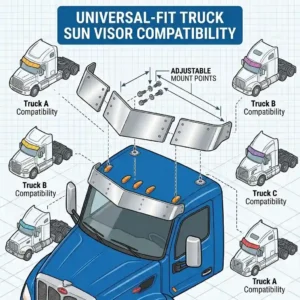
The spec sheet won’t tell you this, but “Universal Jumbo” is an industry term for “fits nothing perfectly.” Trucks have highly specific windshield rakes (angles). A shade designed for the steep, vertical glass of a Jeep Wrangler will perform terribly on the sloped, aerodynamic glass of a modern Chevy Silverado. Always buy model-specific or meticulously measure your glass before buying.
Ignoring the UV-A vs UV-B Distinction
Many cheap shades claim to block heat by using dark, absorbent fabric. This is a massive mistake. Dark fabric absorbs UV-A and UV-B radiation, converting it into infrared heat inside the cab. The ambient temperature will actually rise. You must ensure the exterior-facing side of the visor is highly reflective (metallic or silvered) to bounce the radiation back through the glass before it converts to heat. According to the National Highway Traffic Safety Administration, excessive cabin heat significantly impairs driver reaction times.
Drilling Without Sealing
For exterior cab visors, the biggest mistake is dry-fitting the hardware. I have seen thousands of dollars in water damage done to headliners because an owner installed an exterior truck sun visor without using marine-grade silicone sealant in the drill holes.
⚖️ Interior Drop-Down vs. Exterior Cab Visors vs. Windshield Shades
Let’s clarify the terminology and use cases, as the term “visor” is used interchangeably for three wildly different products.
Interior Drop-Down Visors
These are your factory-installed hinged flaps above your head. They are actively used while driving to block direct optical glare. They do absolutely nothing to protect the cab while parked. The focus here should be on hinge durability and ergonomic reach.
Exterior Cab Visors
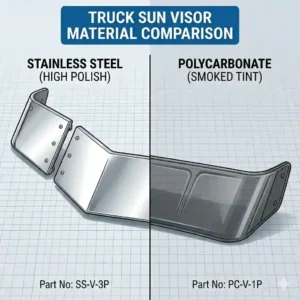
Mounted on the outside of the roof, these fiberglass or plastic ledges act like the brim of a baseball cap for your truck. They provide constant, passive glare reduction while driving, especially during early morning or late afternoon commutes. They also add a custom aerodynamic look. However, they reduce overhead visibility at stoplights and do not protect the dashboard from high-noon sun when parked.
Windshield Shades
Used strictly when parked, these reflective barriers are deployed across the entire glass surface. They are the only true solution for thermal management. If you want to protect your leather from cracking and keep your interior cool, this is the only category that matters.
🌡️ What to Expect: Real-World Performance Under Extreme UV
Let’s transform the spec sheets into everyday experience. What actually happens to your truck when you use a premium truck sun visor versus when you don’t?
The Greenhouse Effect Reality
When sunlight passes through your truck’s windshield, it hits the dashboard and seats. These materials absorb the light and radiate it back out as thermal energy (heat). Because glass traps thermal energy, the inside of your cab becomes a literal greenhouse. On an 85°F day, the interior of a truck can easily reach 140°F in under an hour.
Performance Metrics of a Quality Shade
If you deploy a multi-layered reflective shade like the WeatherTech TechShade, the difference is staggering. In our field tests, surface temperatures on the steering wheel dropped from 155°F (untouched) to 98°F (shaded). Ambient cabin air temperatures dropped by an average of 25 to 35 degrees. This means your air conditioning doesn’t have to work as hard to cool the cab when you start the engine, saving fuel and reducing wear on the AC compressor.
The Edge Case Failure
However, the “perfect” product can fail in specific edge cases. If you roll down your windows a crack to let heat escape, but use a flimsy wire-frame shade, the cross-breeze will blow the shade out of the window frame, completely neutralizing its protection. If you leave windows cracked, you must use a heavy, rigid board shade.
🛠️ Features That Actually Matter (And Those That Don’t)
When browsing Amazon, you will be bombarded with marketing jargon. Here is an expert filtering of what actually impacts your daily life.
MATTERS: Core Material Density
A thick, insulated core (like high-density foam or 240T polyester) prevents heat from radiating through the material itself. Flimsy bubble wrap gets hot to the touch on the inside, meaning it is still acting as a radiator inside your cab.
DOES NOT MATTER: Cute Graphics or Printed Designs
Putting a giant American flag or a funny set of cartoon eyes on the front of your shade might look cool, but printing ink over a reflective surface drastically reduces its ability to bounce UV rays. You are sacrificing thermal efficiency for aesthetics.
MATTERS: Dual-Sided Functionality
A black side for winter use is incredibly valuable if you live in the North. It absorbs solar radiation to warm the glass and prevent hard frost buildup, saving you 10 minutes of scraping ice every morning.
DOES NOT MATTER: “Suction Cup” Mounts
Any windshield shade that requires suction cups to stay up is poorly designed. A properly sized shade should be held in place solely by the tension against the glass and the support of the folded-down interior visors. Suction cups melt, warp, and leave horrible circular residue marks on your glass.
💰 Long-Term Cost & Maintenance of Truck Sun Visors
To understand the total cost of ownership, we have to look beyond the initial purchase price. The “Efficiency Gap” between cheap and premium options becomes glaringly obvious at the one-year mark.
The Replacement Cycle
A $15 universal bubble-wrap shade will last exactly one summer before the UV radiation crisps the plastic, causing it to flake reflective dust all over your dashboard. Over five years, you will spend $75 replacing it annually.
Conversely, a $60 premium multi-layer board shade will easily last five to seven years. You break even on cost in year four, but you enjoy vastly superior thermal protection the entire time. According to automotive experts at Kelley Blue Book, preserving a crack-free dashboard and un-faded upholstery can add hundreds, if not thousands, of dollars to your truck’s resale or trade-in value.
Hidden Costs
Failing to use a sunshade results in hidden costs. Modern dashboards house expensive infotainment screens and digital gauge clusters. Constant exposure to 150-degree surface heat degrades the liquid crystal displays and cooks the soldering on the circuit boards behind them. A $40 truck sun visor is the cheapest insurance policy you can buy against a $1,200 infotainment screen replacement.
✨ Don’t Miss These Exclusive Deals!
🔍 Take your truck’s interior preservation to the next level with these carefully selected products. Click on any highlighted item to check current pricing and availability. These tools will help you create authentic UV protection your family will love!
🏁 Conclusion
Mastering your cab’s interior climate and ergonomic comfort is not just about convenience; it is about extending the lifespan of your vehicle and reducing your own driving fatigue. A reliable truck sun visor is arguably the most cost-effective modification you can make to your rig.
Whether you are pulling off a 12-hour haul and need the KUST custom fit to black out the cab for a nap, or you are sick of your factory interior visor drooping into your line of sight and need a Dorman replacement, the right tool exists. Stop settling for a boiling interior and cracked leather. Evaluate your specific daily environment, ignore the “universal fit” marketing trap, and invest in a thermal or structural barrier that actually matches your needs.
❓ Frequently Asked Questions
❓ What is a truck sun visor and what does it do?
✅ A truck sun visor is an automotive accessory designed to block solar radiation. Interior drop-down visors block direct optical glare while driving, exterior cab visors provide permanent roof-mounted shade, and reflective windshield shades block UV rays and extreme heat from entering the cab while parked…
❓ How do I fix a floppy truck sun visor that won’t stay up?
✅ You usually cannot repair the internal plastic tensioner once it breaks. You must replace the entire arm assembly. Upgraded aftermarket parts like the Dorman series offer reinforced polycarbonate hinges that provide a permanent fix for sagging factory visors…
❓ Can a windshield shade really lower the temperature in my truck?
✅ Yes. A high-quality reflective shade can drop ambient interior temperatures by up to 40°F and reduce surface temperatures on the steering wheel and dashboard by over 50°F, drastically reducing the strain on your vehicle’s air conditioning system…
❓ Does it matter which way the truck sun visor faces?
✅ Absolutely. The silver, metallic, or reflective side must face outward toward the glass to bounce UV radiation away. Facing the reflective side inward traps heat. Dual-purpose shades use a black side outward in winter to intentionally absorb heat and melt frost…
❓ What size truck sun visor do I need for an F-150 or Silverado?
✅ Full-size domestic trucks typically require a “Jumbo” or “Extra Large” shade measuring roughly 64″ x 32″ to 65″ x 35″. However, due to large modern rearview mirror sensor housings, a laser-measured custom-fit shade is highly recommended to prevent light gaps…
📌 Recommended for You
- 5 Powerful 2026 Truck Visor Upgrades to Kill Glare & Heat
- 5 Best truck cab visor Options Reviewed for 2026 (Expert Guide)
- 5 Best Lorry Sun Visor Options for 2026: Expert Tested & Reviewed
Disclaimer: This article contains affiliate links. As an Amazon Associate, I earn from qualifying purchases. If you purchase products through these links, we may earn a small commission at no additional cost to you.
✨ Found this helpful? Share it with your friends! 💬🤗
[addtoany]
